

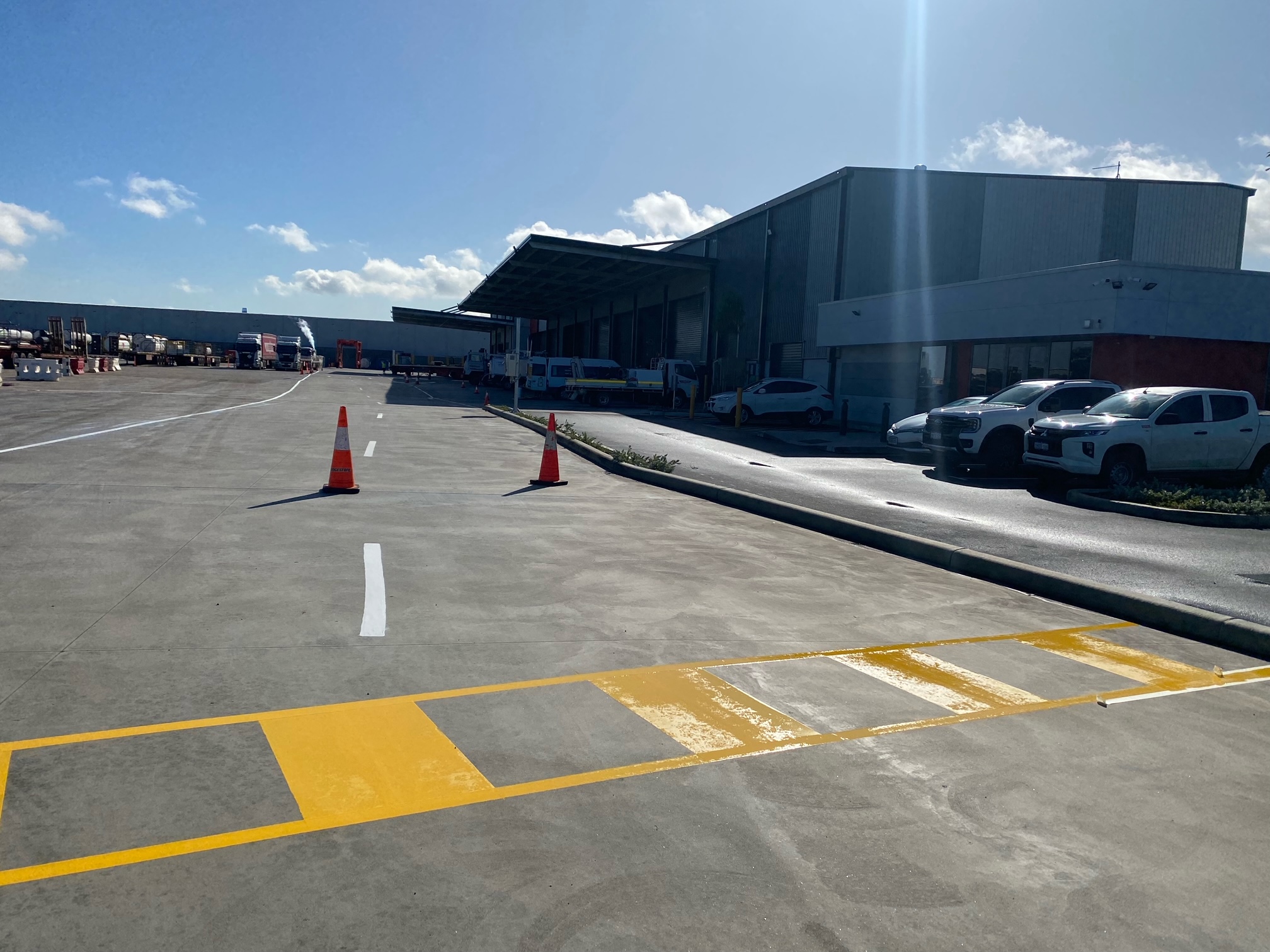
If you run a warehouse in a busy area, you know the daily grind is real. Constant buzz, forklifts moving pallets around and the pressure to keep things moving as smoothly and efficiently as possible. Lately there’s a new layer to add to the mix, sustainability.
Some people think adding in a few solar panels and calling it a day. Now don’t get me wrong, solar is an amazing energy efficiency tool and can help you save thousands in electricity, but true sustainability goes deeper than that.
It’s about how you design the workflow to reduce waste, how you protect your people, and even the type of paint you put on the floor.
At Delineation Line Marking, we’ve shifted the focus toward high-durability, low-VOC solutions that prove you don’t have to sacrifice performance to be environmentally responsible.
The floor you walk on every day is actually one of your biggest opportunities to reduce waste.
This checklist will help you improve your workflow, omissions and efficiency.
- Map the Flow of Goods to Cut Time
The less you have to move around your warehouse, the more efficient you will be. Every extra meter a forklift travels is wasted energy, wasted time, and an increased risk of a collision.
Most warehouses grow organically. You add a rack here, a packing station there, and suddenly your pickers are walking marathons every shift. To fix this, you need a proper flow analysis.
When it comes to high-turnover items, they should be kept closets to the dispatch bays. And one-way traffic lanes should be clearly delineated to two forklifts coming head to head in a narrow aisle.
When we look at sites across Western Australia, the ones that thrive are the ones where the floor tells the story. Using professional warehouse line marking to define these zones isn’t just about compliance. These line markings act as visual communication.
If your drivers know where to go, and its clearly marked, the less area there is for mistakes or collisions.
- Transition to Low-VOC and Water-Based Materials
If you’ve been around while old school solvent based paint is being applied, you know the smell. Those are Volatile Organic Compounds (VOCs) and they aren’t just bad for the planet. These VOC’s are bad for the health of your team, especially their lungs.
Sustainability in 2026 is as much about social responsibility and indoor air quality as it is about carbon footprints.
Most people worry that eco-friendly wont last, but that’s not treu anymore.
Sustainable products have come along way since they were first invented.
Modern water-borne road marking paints dry fast, usually within 5 to 15 minutes on a typical Perth day.
And a side note benefit, is that since these paints don’t contain those harsh solvents, you don’t need to shut down the whole facility for 24 hours just to let the fumes clear.
You get a sharper line, a safer environment and significantly less environmental impact.
- The Longevity First Mindset
Its also worth noting that having to get your floor markings redone every six months is not efficient.
Think about the amount of waste. More paint, more transport emissions for the crew, more plastic containers in the bin, and more downtime for your business.
If you have high traffic areas, then standard paint may not be the best choice for your warehouse. For high traffic areas, the best solution would be Cold Applied Plastic (CAP).
Now if you’ve never heard of this, you’re probably wondering what it is. It’s a two-part liquid plastic that chemically bonds to the concrete.
And you’re probably wondering how plastic could be sustainable? While it costs more upfront, it can last 5 to 10 years, whereas standard paint might fade in one or two.
Choosing a durable material is a massive win for waste reduction. CAP is recommended for the high traffic areas that the forklifts drive over constantly. Then leave the lower traffic areas for the water based paints.
It’s about being smart with your resources.
- Prioritise Pedestrian Delineation
A safe workplace is a sustainable workplace.
In Western Australia, WorkSafe is strict about vehicle and pedestrian separation. It’s not enough to just “tell” people where to walk. You need physical or visual barriers.
Your walkways should be a solid, high visibility colour, this usually means yellow or green.
The exclusion zones should be red. These are the areas that are off limits around machary etc.
Wherever its necessary to have zebra crossings, you must include them. Its essential for places that forklifts and pedestrians may cross paths.
The goal is to have lines marled so clearly you don’t even have to think where you’re going. Even if a new contractor walks in who’s never been to your Perth facility before, they should instinctively know exactly where they are safe and where they aren’t.
- Smart Lighting and Harvesting the Perth Sun
If you run a massive warehouse, you probably know how much lighting and electricity goes into keeping it up and running. Being able to reduce some of those overhead costs using our Perth sun is great.
Many older warehouses in WA are still running metal halide or fluorescent high bays that eat power and generate unnecessary heat.
If you switch to LED lights and install motion sensors so they are only on when needed.
In a warehouse, you often have aisles that stay empty for 40 minutes at a time. Why light them?
Installing sensors means that only when someone walks by they turn on. Turning off unnecessary lights also helps keep the warehouse cooler.
Your Sustainability Checklist:
Conduct a Flow Audit: Are your forklifts taking the shortest route possible?
Check Your Paint Specs: Are you using low-VOC or water based options to protect air quality?
Assess Durability: Would a high-performance material like CAP save you from repainting every year?
Visual Separation: Are pedestrian walkways clearly marked and compliant with Australian Standards?
Making it Happen
A sustainable warehouse doesn’t just happen over night. It takes small, intentional decisions and steps towards a cleaner and more efficient future.
Whether you’re making changes to a small workshop in Osborne park or a huge warehouse in Welshpool, your safety and efficiency should always be number one priority.
Our team at Delineation Line Marking knows the local WA standards inside and out.
Would you like us to come out and do a site walk through to see where your current layout might be costing you efficiency?