Eco-Friendly

Hello, Wind Powered Baltimore Week!

Posted on

We are THRILLED to announce Wind Powered Baltimore Week, October 16 – 21st. We have a week full of great events to celebrate the amazing wind powered community in Charm City.

Events range from happy hour co-hosted with Baltimore City Paper at Golden West Cafe to Not Your Mom’s Ice Cream Social at Taharka Bro. Ice Cream Factory. Don’t miss the Green Neighborhood Challenge kick off at Union Mill, and see the full schedule of events.

Congrats to our Clean Currents powered businesses that raked in the recognition from Baltimore City Paper’s Best Of Baltimore today! We can’t wait to celebrate with you during Wind Powered Baltimore Week. Here’s the round up of wind powered winners:

(more…)

Eco-Friendly

Energy Efficiency 101 with TerraLogos Energy Group

Posted on

So, what is the deal with energy efficiency? The concept is easy enough – use less electricity, save on your bills. But how do you know which investments will give you the energy savings, and cost savings, you’re looking for?

Peter Van Buren of TerraLogos Energy Group helped the Clean Currents team answer these questions with ways to prioritize your energy efficiency investments.

  • Sealing ducts, air leaks and insulation gives you the best return on your investment. If you have leaky ducts and air leaks, you’re heating and air conditioning your neighborhood rather than your home. By sealing those holes, your furnace and air conditioner can use less energy to heat and cool your home. You’ll see the most return on your investment by taking this step first.

(more…)

Eco-Friendly

Megan Barrett Joins Clean Currents

Posted on

This week, Megan Barrett joined Clean Currents as our new Communications Manager. Megan comes to Clean Currents after spending three years at Live Green, a grassroots organization working to make green living easy and affordable for people in the DC metro area. As Co-Director, she managed their communications strategy, cultivated partnerships, and organized community events. She helped grow the start up from its infancy to the organization it is today.

When not at work, Megan grows tomatoes, peppers, herbs, and other local fruits and veggies in her community garden, plays interior designer in her Cleveland Park apartment and is training for a half marathon. She’s been dedicated to the environment since a small child. Her parents often recount the trials of raising the young environmentalist who would make her family bring recycling home from vacation and ration water usage in the bathroom.

Megan has a M.A. in Global Environmental Policy from American University and a B.A. in Political Science from Kenyon College. Contact her at mbarrett@cleancurrents.com.

Eco-Friendly

Gettin GNECy With It

Posted on

While many of you are enjoying the last precious days of your summer vacation and area children prepare for the upcoming school year, here at Clean Currents we’re busy gearing up for the next round of the Green Neighborhood Challenge (GNEC), which officially begins on October 1st.

Armed with a new and improved program structure, new website, new promotional materials, new video, and a new staff member to lead the program, we are more excited than ever to help build more sustainable communities in the Mid-Atlantic through our hallmark community engagement program!

(more…)

Eco-Friendly

Customer of the Month – August

Posted on

Clean Currents is happy to present our August Customer of the Month: Charlie Garlow.

Charlie lives in the Woodmoor Neighborhood in Silver Spring, MD.  He is a lawyer and co-owner of The Green Commuter bike shop located in Takoma Park.


When asked what his favorite Clean Currents wind powered business was, he couldn’t help but say his own, The Green Commuter, which sells standard and electrically powered bicycles.

Charlie was selected the our August Customer of the Month because of his commitment to minimizing his impact on the environment and spreading knowledge and information on sustainability to others.

(more…)

Eco-Friendly

Sailing into the Sunset

Posted on

It seems as though we were just planning our Memorial Day getaways, but alas, the end of summer is nigh — and as we sail into summer’s sunset, let’s take a look at what’s occured during the past few months …

On all counts, the summer of 2012 was the hottest on record, setting new high temperature benchmarks across the country, exacerbating one of the worst wildfire seasons in history, and causing the worst drought in the United States since that of the mid 1930′s dust bowl.  In fact, the full economic consequences of this summer’s drought have not yet hit, as experts are predicting prices for grains–and in turn, prices for meat–to soar as farmers prepare for record low harvests.

It was also a cruel (cruel) summer for the globe’s usually ice-clad regions.  Climatologists are expecting a record low for Arctic sea ice this season, beating even the most aggresive warming trends and forecasts.

(more…)

Eco-Friendly

Apples to Oranges

Posted on

We’re entering the final stretch of Presidential campaigning and energy is one of the top issues that continue to be brought up by both President Obama and Governor Romney.  Both men have reiterated their support of “homegrown” sources of energy in order to provide greater energy security for the country, but differences arise when it comes to their overall energy policies.

To cut through the cable news punditry that’s proliferating on the subject of each’s energy policy, here’s a quick reference guide:

Governor Romney

Mitt Romney’s proposed energy policy focuses on decreasing environmental regulation of energy while increasing production of domestic carbon-based energy resources in the hopes of creating jobs and bolstering the economy with lower prices for energy.

(more…)

Eco-Friendly

Too Hot, Too Dry

Posted on

Have you been scratching your head at the seemingly endless barrage of “weather anomalies” we’ve been subjected to, wondering what role human-induced climate change is playing?

A new scientific study out this week may help fill in some of the blanks for you.  NASA’s senior climate scientist, Dr. James Hansen and two co-authors published a study in the Proceedings of the National Academy of Sciences about extreme heat waves and droughts.  Their main finding: The percentage of Earth’s land surface hit by extreme heat during summer has expanded from less than 1% in the years 1951-1980, to as much as 13% from 1980 to now.

The authors use the metaphor of “climate dice” to explain what we are doing to our planet by burning fossil fuels and destroying forests.  A normal set of dice gives a standard set of outcomes based on statistical likelihood of hitting a certain number.  For example, the odds of rolling a “7″ with two dice are about one in six.  However, if you “load” the dice in such a way that makes them almost always land with a “4″ on one dice and a “3″ on the other dice, you are substantially increasing the odds of rolling a 7; likewise with climate.  By significantly increasing the amount of greenhouse gases in the atmosphere, we are in essence loading the climate dice to land more frequently on “extreme weather”.

(more…)

Eco-Friendly

Production Tax Credit – Time to Get Serious

Posted on

Domestic wind power has been the fastest growing source of energy in the U.S. for the past several years, adding over 1/4 of all new electric generating capacity in 2010.  And just yesterday, Interior Secretary Ken Salazar presided over the opening of the country’s latest wind farm in Nevada, pushing the total installed wind power capacity in the U.S. over 50 Mega Watts – or enough to power over 10 million homes.  But we’re not breaking out our party hats quite yet.  This is because the Renewable Energy Production Tax Credit (PTC), which reduces the federal income taxes of a qualified tax-paying owner of renewable energy projects based upon the electrical output of its grid-connected renewable energy facilities, is set to expire at the end of this year.  The credit of 2.2 cents per kilowatt-hour (KWh) of electricity generated has been a critical source of financing for wind farm owners, and the uncertain state of its future is causing havoc in the industry.

With the Presidential election only three months away, we’re nearing the zenith of political and partisan fanaticism.  And of course, the state of the domestic economy–specifically the persistent high unemployment rate and the mounting deficit–is top of mind.  Understandably, this has made many lawmakers skeptical about extending or proposing any new tax breaks for business in general.  The basic argument being: if a business or industry can’t float on its own then perhaps it should sink.  Add in the fresh memory of Solyndra, a bankrupt maker of solar modules that defaulted on a federal loan, and the image of America’s renewable energy industry begins to look a little sullied.

(more…)

Eco-Friendly

Neighborhood Wind Gets More Neighborly

Posted on

Clean Currents Neighborhood Wind™ Now Sourced from Pennsylvania Wind Farm

For the past two years, Clean Currents has offered customers the choice between being powered by National Wind RECs or Neighborhood Wind™.  The main difference between the two product offers is the location of the energy generating wind farms.

Both our National Wind RECs and Neighborhood Wind™ products are Green-e Energy certified; the highest standard of renewable energy certification and verification.  Whereas our National Wind RECs product is sourced from domestic wind farms located in the continental United States (specifically Elkhorn Ridge Wind Farm in Bloomfield, Nebraska, Adair County Wind Farm in Adair, Iowa, Benton County Wind Farm in Fowler, Indiana, Turkey Track Wind Farm in Blackwell, Texas, and the Heartland Consumers Power District in Wessington Springs, South Dakota), our Neighborhood Wind™ product was sourced from a regional wind farm called the Big Sky Wind Farm in Bureau & Lee Counties, Illinois.  But we are happy to annonuce that our Neighborhood Wind™ product is now sourced from the Highland North Wind Farm in Cambria County, Pennsylvania (pictured below).

(more…)

Eco-Friendly

Sustainable Style at Boundary Road

Posted on

Commercial Customer Spotlight: Boundary Road  

Things have been heating up on H Street NE for a little while now.  This bustling neighborhood’s streetscape is almost unrecognizable compared to its worn look just a few years ago.  Bars and late night clubs like Rock and Roll Hotel and Biergarten Haus have clustered towards the eastern end of the strip at 14th St. and H NE, just a few doors down from neighborhood anchor Atlas Performing Arts Center.  But Clean Currents wind powered customer Boundary Road, which bills itself as a true “neighborhood restaurant”, chose to open on the less raucous–if more accessible–end of H Street between 4th and 5th streets NE.

Clean Currents staff member Eric Vermeiren had a chance to chat with Karlos Leopold, general manager and owner of the relatively new (circa Feb. 2012) Boundary Road, about opening a restaurant that’s focused on seasonal ingredients and sustainable operations.

(more…)

Eco-Friendly

Understanding Your Bill

Posted on

As a resident of Maryland, Washington, DC, or Pennsylvania you can choose your electric supplier – but what does that mean exactly?  Deciphering your electric bill can be confusing!

Below is a brief explanation of the different components of electricity delivery and what to look for when reviewing your monthly utility bill:

Charges

Overview

There are three main components that comprise your monthly utility bill: GenerationTransmission, and Distribution.  When you choose to switch electric suppliers, your new supplier is responsible for the Generation & Transmission portion of your bill. These two sections are often referred to as “Supply Charges”. The Clean Currents rate which you select upon enrollment will replace both the Generation & Transmission charges from your utility. There are no other charges or fees associated with making the switch to Clean Currents. The Distribution portion will not change and will continue to go directly to the utility.

On average, the Generation section of your utility bill constitutes about 75% of the total monthly cost. Your local utility remains responsible for Distribution, which includes billing, maintenance, and service issues.  (Below is a scanned Pepco bill, showing the three components)

Generation

This is the cost of energy produced by a facility (power plant/wind farm) before being delivered to the “grid.”  This cost is dependent upon the type of power, time of year, and the length of the contract, and how these variables are impacted by commodity markets. When you switch your electric supplier from your local utility to a competitive electricity supplier (like Clean Currents), this section will be replaced by the Clean Currents rate you select upon enrollment.

Transmission

This is the cost to bring high-voltage electricity from power plants to distribution points near to you and includes the cost of high-voltage power lines and towers, as well as monitoring equipment. This section will also be replaced by Clean Currents rate you select upon enrollment.

Distribution

This charge is the cost to deliver electricity through power lines strung on utility poles, across transformers, to where you use it. This charge also includes repair crews and emergency services.  Regardless of what company you choose to supply you with electricity, your local utility will continue to charge you this portion of your bill.  

Service Options

Standard Offer

Maryland, Washington, DC, and Pennsylvania have deregulated electricity markets.  Residential and commercial customers in deregulated electricity markets can elect to switch to a competitive electricity supplier (like Clean Currents).  But if you do not select a competitive electricity supplier, your local utility will supply you with their “standard offer service”.  These standard offers are seasonally adjusted unlike Clean Currents wind power rates, which are fixed for one or two years.

Power Options

Renewable Power vs. Standard Power

The beauty of a deregulated electricity market is customer choice.  In Maryland, Washington, DC, and Pennsylvania you have a choice when it comes to not only what company supplies your electricity, but also the source of that power.

Standard power produced in the Mid-Atlantic region comes primarily from fossil fuel sources – mainly coal.  With Clean Currents, you can choose to be powered by clean, renewable wind power at your home or business.  To learn how you can switch to Clean Currents wind power.

Eco-Friendly

Clean Currents and SolarCity Pioneer New Way for Homeowners to Adopt Solar Power

Posted on

Partnership allows Maryland and DC homeowners to install solar panels for free while paying for their solar electricity and utility power on a single bill

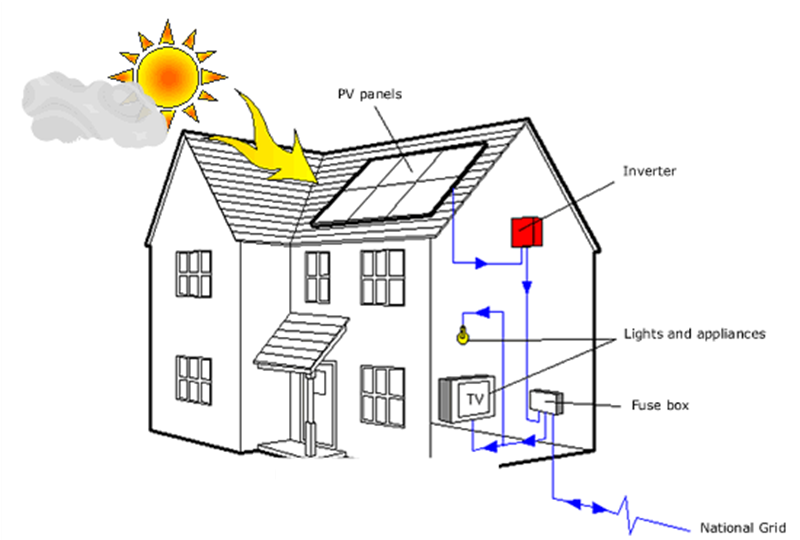
Clean Currents, a leading supplier of green electricity, today unveiled a new clean energy purchasing program that allows Maryland and Washington DC homeowners to pay for electricity from solar panels at a discount to utility rates on a single, consolidated electric bill. Rockville’s Clean Currents is partnering with SolarCity—a national leader in clean energy products and services with local offices in Jessup, MD and Washington, DC—to create the program.

Under the new program, homeowners sign a fixed-price Power Purchase Agreement (PPA) with Clean Currents and get a free solar panel installation on their roofs from SolarCity. The pricing of the PPA will be available at rates lower than current utility rates, saving homeowners money in the short-term, while allowing them to protect their family budgets in the long term. SolarCity also insures and monitors the systems, guarantees their performance and provides necessary repairs for no additional cost.

(more…)

Eco-Friendly

What is the Green Neighborhood Challenge?

Posted on

The Green Neighborhood Challenge (GNEC) is Clean Currents’ hallmark community engagement program for groups to get involved in clean energy, fundraise, and help build a more sustainable community!

GNEC GOALS:

  • Educate Friends and neighbors about clean energy and living sustainably
  • Encourage Community members to adopt eco-friendly habits
  • Inspire Individuals to get involved in the clean energy movement!

TIMELINE:
Program Runs October 1st – Earth Day (April 22nd) Annually

(more…)

Eco-Friendly

Solar Thermal

Posted on

With Clean Currents Thermal, Installing a money-saving Solar Hot Water System at Home is Easy and Affordable

A Solar Hot Water system is the most energy efficient way to heat water – and hot water is the second biggest energy hog in your home.  That equates to a potential savings of hundreds of dollars a year!

Clean Currents Thermal uses the latest technology in solar hot water systems, exclusive to our partner Sunnovations.

Why Solar Hot Water?

An average American household spends up to 25% of its total energy use on heating water (second only to space heating and cooling). For most homes in the Mid-Atlantic, a solar hot water system will provide anywhere between 65% to 80% of a home’s hot water needs from the sun’s rays.

(more…)

Eco-Friendly

Business Spotlight Community Forklift

Posted on

Clean Currents staff member Nicole Dvorak had a chance to sit with Ruthie Mundell at Community Forklift to chat all things sustainable interior design.

Community Forklift is the area’s leading thrift store for new and reclaimed flooring, cabinets, lumber, appliances, paint, doors, windows, bricks, lighting, radiators, hardware, insulation, sinks, tubs, toilets and more.

Here’s what Nicole learned about the ins and outs of shopping for reclaimed furniture and decor:

The Scoop

Everyone is looking for a great piece of furniture, filing cabinet, sink, something to re-purpose for our living space while not dropping a wad of cash on it.  And while we’re out there desperately trying to find a coffee table that *might* fit our style and not break the bank, if we could be eco-savvy AND help the community at the same time, we’d feel even groovier about it.  Enter Community Forklift.

(more…)

Eco-Friendly

Shoot for the Stars

Posted on

What do jet engines, computers, transistors, the internet, and the Global Positioning System (GPS) have in common?  They all owe their existence to early stage investment by the U.S. Government.

When it comes to emerging technologies and industries, very often the barriers to market entry can be prohibitively high for purely private sector investment.

Government funding can mitigate the high costs and risks of initial research and development (R&D) and through its huge power of procurement, government funding allows private industry to take bigger gambles on R&D.  With early stage investment, government funding aims to bring embryonic technologies to commercially viable products and services.  The experimentation that accompanies these new technologies can be very costly and entail considerable risks.  If private enterprise can imagine commercial promise in a radically new technical idea then it will gamble.  But there are limits to a firm’s willingness to gamble – and this is where government funding can step in.

(more…)

Eco-Friendly

The Chesapeake Bay Foundation Purchases 100 Wind Power Through Clean Currents

Posted on

Clean Currents, a leading retail provider of wind power in Maryland and the District of Columbia, announced today that The Chesapeake Bay Foundation (CBF) will purchase renewable energy for its organizational locations. The CBF has committed to purchasing Green-e Energy certified wind power from Clean Currents for 100 percent of its facilities electricity usage.

The Chesapeake Bay Foundation’s stunning headquarters (also known as The Philip Merrill Center) located in the Bay Ridge neighborhood east of downtown Annapolis, has won international acclaim as a model for energy efficiency, low impact design, and water conservation. It also has the distinction of being the first building in the United States to receive a Platinum rating through the U.S. Green Building Council’s LEED (Leadership in Energy and Environmental Design) rating program.

(more…)

Eco-Friendly

Shale Gas Drilling and Hydraulic Fracturing

Posted on

June 2011 Brief on Hydraulic Fracturing in Shale Gas Deposits / Update from September, 2010 Report

Background:
Recent discoveries of vast natural gas resources in the Marcellus Shale region (spanning PA, NY, MD and DE) and in other parts of the country are driving down natural gas prices and sparking a modern “gold rush” of companies seeking to cash in on new drilling opportunities. This abundance is leading many energy industry experts and politicians to tout the promise of natural gas as a major piece in meeting US energy needs and reducing dependence on foreign resources. Because natural gas typically has a lower carbon emissions profile than coal,  progressives (including President Obama and the Natural Resources Defense Council)  have joined more conventional allies of natural gas, calling it a ”bridge fuel” between coal-fired generation and renewable options. However, recent studies have found that shale gas may not be as an environmentally or climate friendly and a shift to this fuel source may actually lead to increased greenhouse gas emissions.

(more…)